Product Description
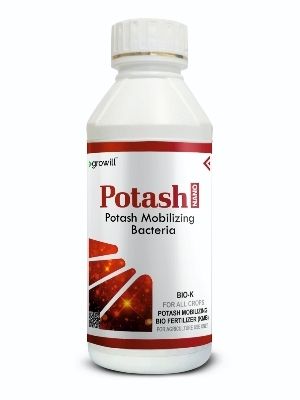
Potash Nano is a unique formulation to address potash deficiency for all crops. This formulation is made available in the water soluble form for foliar/ fertigation/ / drip purposes. This formulation is potential to its credit than any other type of potassic fertilizers. Bio potash has a lot of success stories for enhancing farm productivity similar to inorganic & chemical based potassic fertilizer applications with bio potash, nationally and internationally.
Dosage:-40-50ml/15 ltr of water
Packaging:-1ltr, 500ml
How Does Potash Mobilizing Bio Fertilizer (KMB) Work?KMB employs beneficial microorganisms to solubilize and mobilize insoluble potash from the soil, making it readily accessible to plant roots. This biological process aids in increasing the potassium content available to crops, which is essential for their overall development, stress tolerance, and higher productivity.
Recommended Usage and DosageTo apply KMB, dilute 40-50ml of the liquid biofertilizer in 15 liters of water, ensuring thorough mixing. Use the solution for foliar spray or soil drenching based on crop requirements. Consistent application guarantees even distribution of potassium, enhancing the effectiveness of fertilization and plant nutrient uptake.
Packaging and PurityKMB is available in convenient 1-liter and 500ml plastic bottles. With a high purity of 98% to 100%, each batch is specifically formulated for optimal bioactivity and ease of handling. The liquid state ensures quick mixing and user-friendly application for various farm settings.
FAQs of Potash Mobilizing Bio Fertilizer (KMB):
Q: How should I use Potash Mobilizing Bio Fertilizer (KMB) for my crops?
A: Mix 40-50ml of KMB liquid in 15 liters of water, and apply the mixture to your crops through soil drenching or foliar spraying. Follow this practice during relevant growth stages for best results.
Q: What benefit does KMB provide to plants?
A: KMB increases the availability of potassium from soil reserves, improving plant resilience, promoting robust growth, and enhancing overall yield and quality of crops.
Q: When is the best time to apply KMB?
A: Apply KMB during critical growth phases such as vegetative growth, flowering, and fruiting periods for maximum nutrient uptake and plant benefit.
Q: Where is KMB manufactured and supplied from?
A: KMB is manufactured and supplied in India, catering to agricultural needs across the country.
Q: What makes KMB different from chemical potash fertilizers?
A: KMB uses natural microorganisms to mobilize potash, providing a more sustainable and environmentally friendly solution compared to synthetic fertilizers.
Q: What is the physical form and packaging of KMB?
A: KMB is a white liquid supplied in sealed 1-liter and 500ml bottles, ensuring easy handling and storage.
Q: How does the slow-release nature of KMB benefit farmers?
A: The slow-release mechanism of KMB means potassium is made available to crops gradually over time, reducing nutrient loss and promoting long-term soil fertility.







 Send Inquiry


 Send Inquiry
 Send SMS


